
Atlanta has a lot of lots.
According to a new report from housing-data supplier Zonda, Atlanta ranked third among the top 30 U.S. markets in terms of new home lot supply in the second quarter, coming in behind Denver and Austin, Texas.
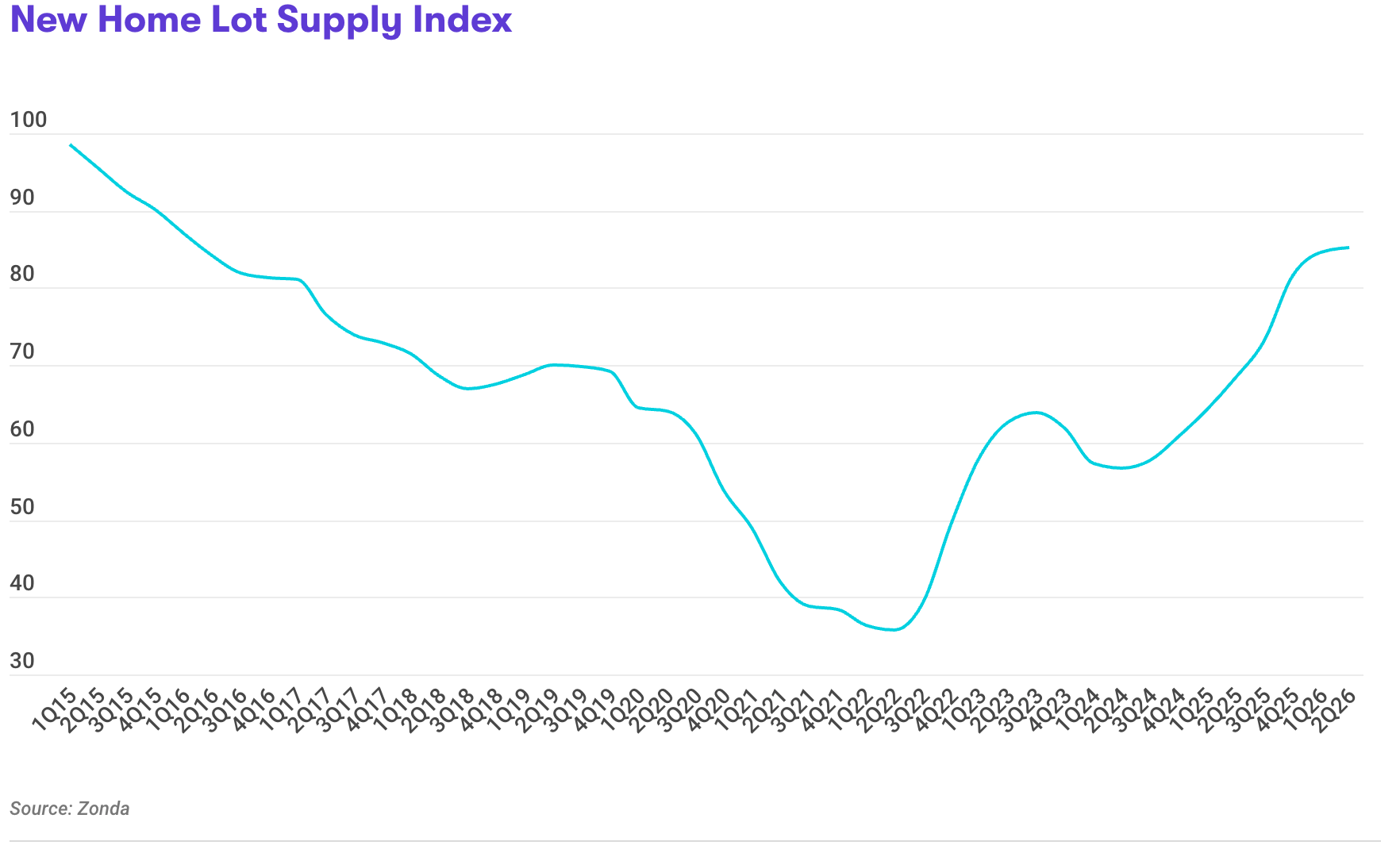
Nationwide, Zonda’s New Home Lot Supply Index rose for the eighth consecutive quarter, climbing 24.6% year over year to a reading of 85.2. The new reading moves the United States’ lot supply from “slightly undersupplied” to “appropriately supplied,” Zonda said.
“The national lot market has reached an important milestone,” said Ali Wolf, chief economist for Zonda and NewHomeSource. “For the first time since 2016, the market is considered ‘appropriately supplied.’ The shift reflects both improving lot availability and a moderation in housing starts as builders respond to a softer demand environment. While the national market has returned to balance, conditions still vary significantly from one market to another.”
At 130, Atlanta is now considered “significantly oversupplied” following a 30% jump from second quarter 2025.
Zonda’s lot index is based on the number of single-family vacant developed lots (VDL) and the rate at which those lots are absorbed through housing starts. Should housing starts pick up in the third quarter, the national index could move back to undersupplied territory, Zonda noted.
A drop in future lots
Zonda also tracks future, or “upcoming,” VDL lots through four stages of development: raw land, clearing equipment, excavation and roadwork. Upcoming lots are described as those expected to be delivered in the next 12 to 18 months.
In the second quarter, total upcoming lots slid 4.5% year over year and 2.2% quarter over quarter. Upcoming lots were down 13.6% from a 2022 peak but up 21.4% compared to second quarter 2019.
Among total upcoming lots, those with equipment on site were up 2.6%, those in the excavation stage were down 7%, and those undergoing roadwork were down 8.6%.
“Builders continue to strike a careful balance between preparing for future demand and avoiding excess supply,” Wolf said. “Upcoming lot activity declined in the second quarter as developers remained disciplined about bringing new lots through the pipeline. While activity slowed, the development pipeline remained active, highlighting a mindset of cautious optimism. Developers are exhibiting restraint today while still positioning for future opportunities.”