
By the Numbers

Inventory rose 3.3% month over month and 0.6% year over year to 1.55 million homes, which equals a 4.5-month supply of unsold inventory, NAR said.
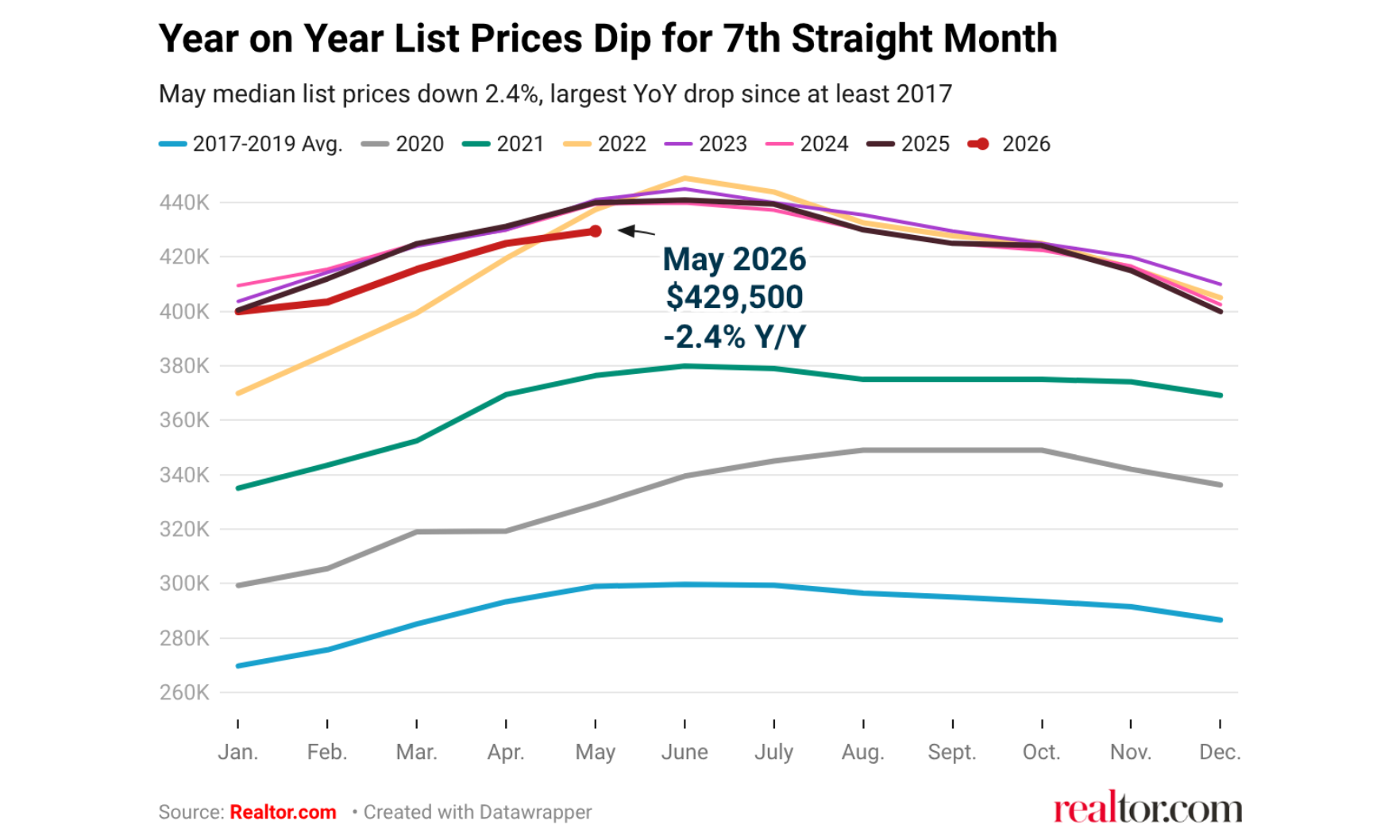
Amid what Realtor.com called the most active spring in years, the housing market is finding a new equilibrium.
Looking ahead, Cotality expects home prices to rise 5.3% between April 2026 and April 2027.

The median sales price of new homes sold in April rose 8% to $422,500 from $391,100 in March, the U.S. Census Bureau and the Department of Housing and Urban Development reported.

Home prices continued to rise in March, but the rate of increase slowed yet again, according to the latest S&P Cotality Case-Shiller Home Price Index.
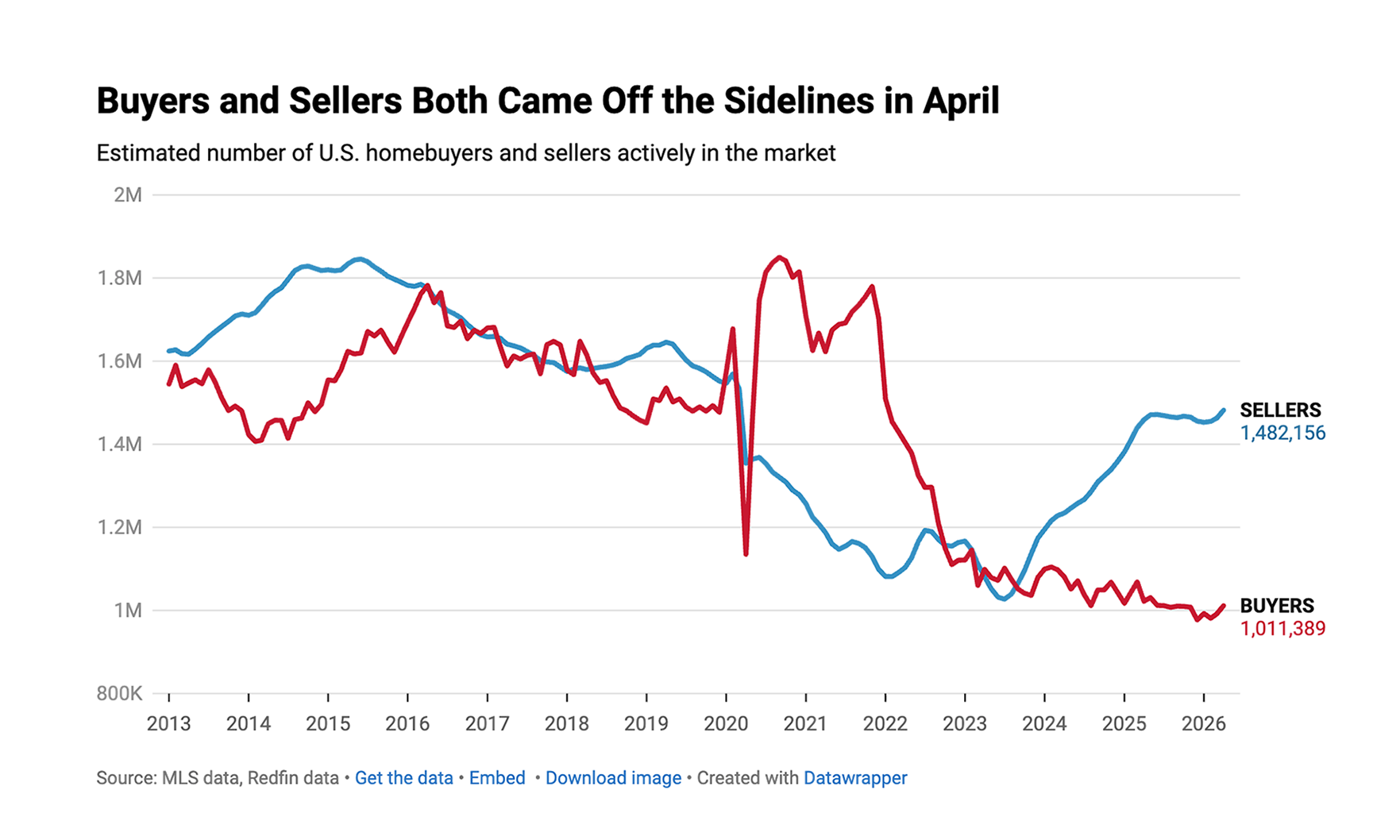
Redfin reports there were about 46.5% more sellers than buyers in April 2026, down from 47.5% in March and 48.9% in December 2025.

Despite a monthly decline, the rate of new-home construction still came in above consensus estimates.

Among the top 50 metro areas, Boston and Miami led the pack.
The median-existing sales price for all housing types rose 0.9% year over year to $417,700, its 34th consecutive increase.

Pending sales dropped 21.8% year over year from 6,147 in April 2025 to 4,810. Month over month, they were down 1.8%.

Nationally, home sales in the 50 metro areas surveyed by REMAX posted their largest monthly gain in three years, increasing 31.6%.

The 2026 spring housing market is neither surging nor stalled, but moving forward as both buyers and sellers adjust their expectations.
S&P Dow Jones Indices noted that inflation outpaced national home-price appreciation for the ninth month in a row.

That timeline is typical for a family saving 15% of their income, assuming a 15% down payment.

Boomers made up 42% of all homebuyers during the period from July 2024 to June 2025, unchanged from the same time a year prior. Millennials lost market share, making up 26% of buyers, down 3% year over year.
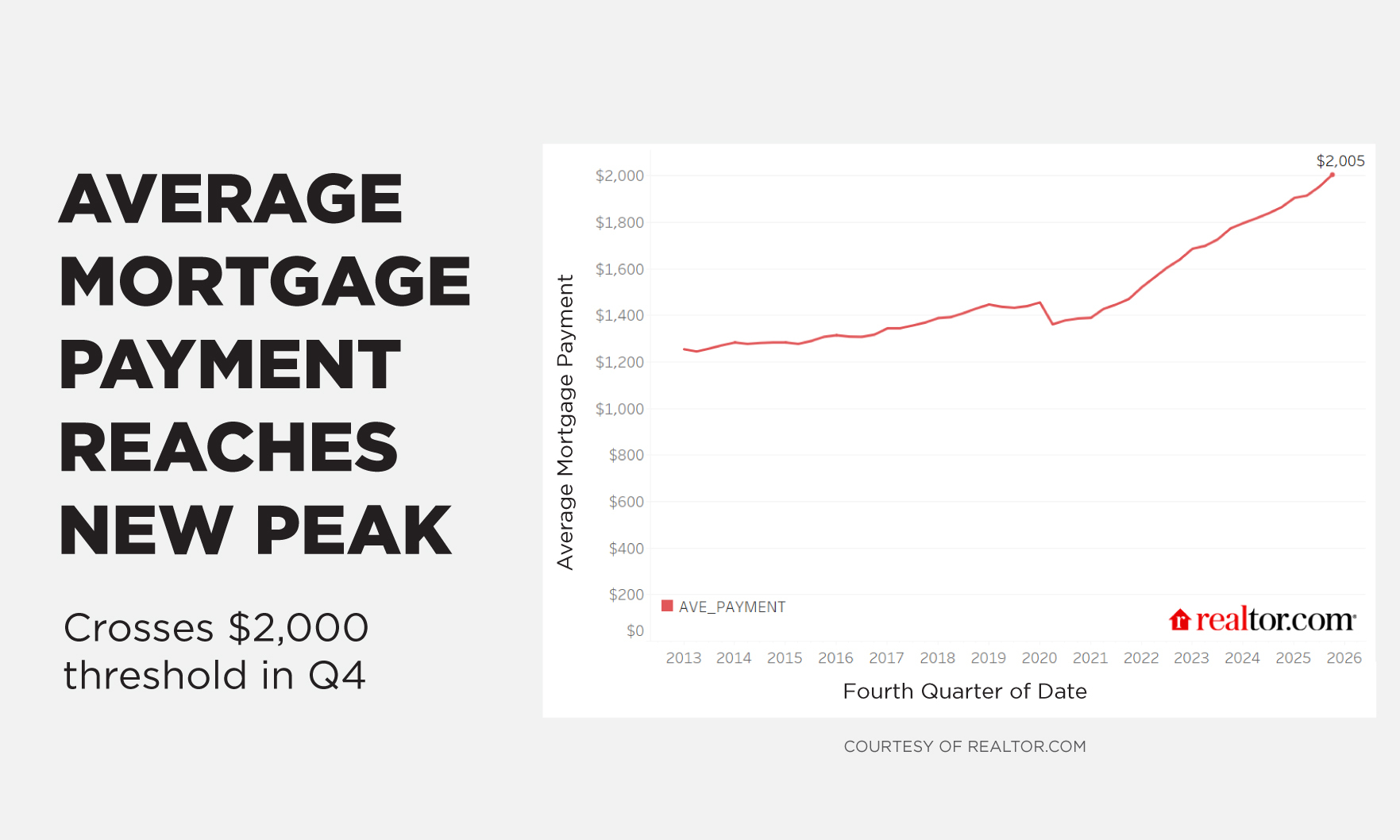
The average monthly payment on an outstanding home loan reached $2,005 in the fourth quarter of 2025, according to Realtor.com’s latest data based on FHFA figures.